HACKER TUBES / 播放清單
當資料跨越一台機器
從關聯式資料庫起步,逐步進入分散式系統、共識演算法、事件串流與故障測試。
6 部影片 · 4 小時 55 分鐘
開始觀看建議觀看順序
點擊任意影片開始觀看,在觀看頁透過上一部、下一部繼續這份清單。
- 01
01 - Course Introduction & Relational Model (CMU Databases Systems / Fall 2019)
CMU Database Group · 6 則 HN 推薦The first lecture of Andy Pavlo's CMU 15-445 Intro to Database Systems (Fall 2019), covering course introduction and the relational model.
- 02
Distributed Systems 1.1: Introduction
Martin Kleppmann · 5 則 HN 推薦The first lecture in Martin Kleppmann's 8-lecture distributed systems series from the University of Cambridge undergraduate course. It introduces the subject, and accompanying lecture notes are available.
- 03

Raft lecture (Raft user study)
Diego Ongaro · 4 則 HN 推薦John Ousterhout lectures on the Raft consensus algorithm, made for the Raft user study comparing how students learn Raft and Paxos. It covers leader election and log repair.
- 04
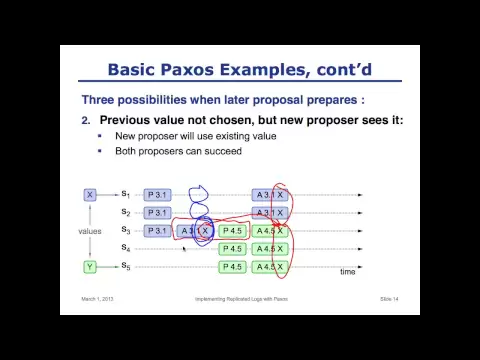
Paxos lecture (Raft user study)
Diego Ongaro · 6 則 HN 推薦John Ousterhout's slides-and-voiceover lecture on Paxos, made for the Raft user study comparing how students learn Raft and Paxos. It is a full introduction to the Paxos consensus algorithm.
- 05

"Turning the database inside out with Apache Samza" by Martin Kleppmann
Strange Loop Conference · 9 則 HN 推薦Martin Kleppmann argues that databases are global shared mutable state and proposes treating them as an ever-growing log of immutable facts. Derived data such as caches, indexes and views is then built by stream processors like Apache Samza. The talk draws on Kafka and LinkedIn's experience with commit logs.
- 06

"Testing Distributed Systems w/ Deterministic Simulation" by Will Wilson
Strange Loop Conference · 12 則 HN 推薦Will Wilson of FoundationDB explains how the team tested their distributed database using deterministic simulation. By running the whole system in a simulator with injected faults and reproducible seeds, they could find rare concurrency and network bugs.